
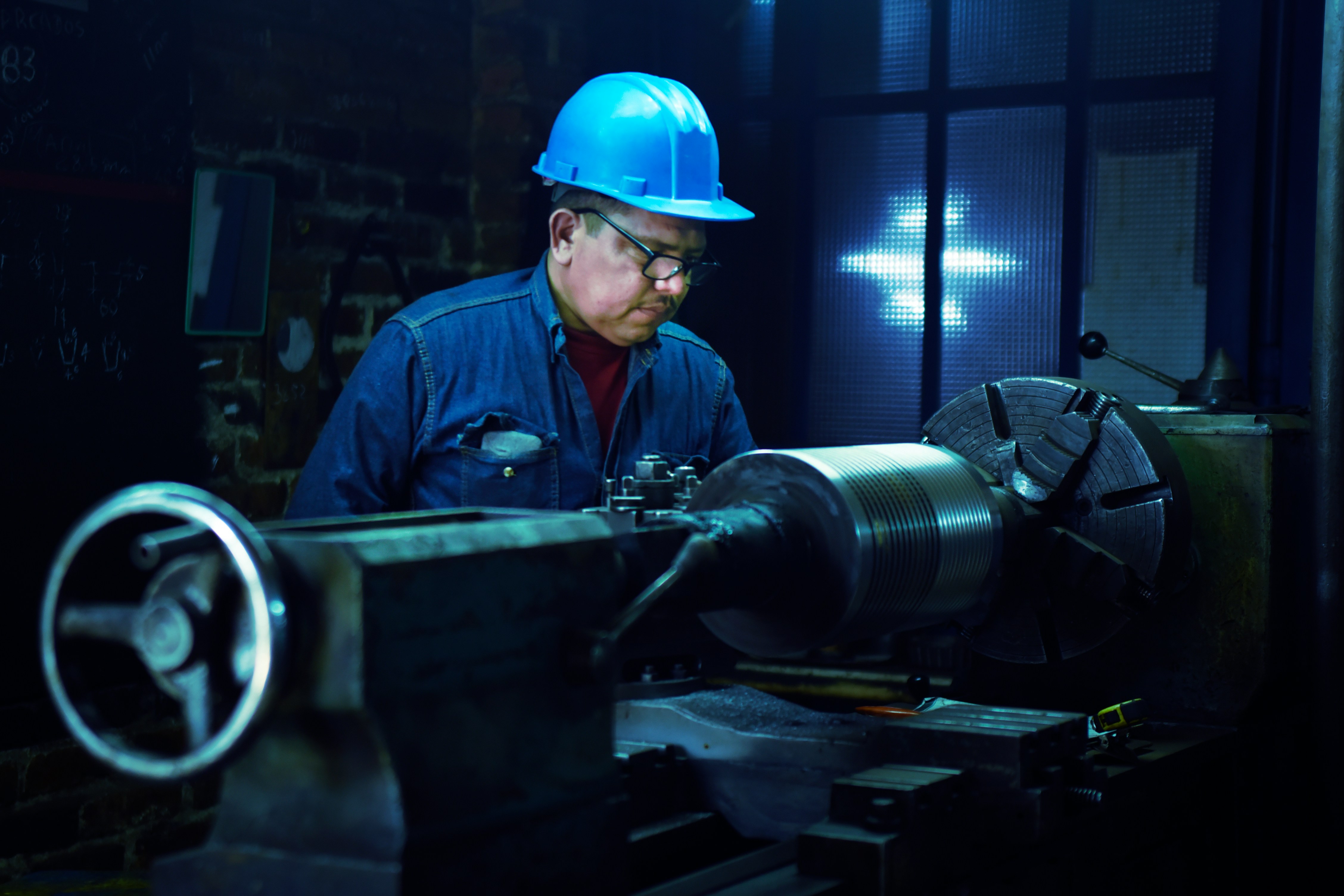
At some point, almost every growing manufacturing plant faces the same decision: we need an engineer to own our equipment problems. The question is which kind.
Maintenance engineer and reliability engineer are two of the most frequently confused roles in industrial hiring. Some companies use the titles interchangeably. Some job postings describe one role under the other's title. And many plant managers, when pressed, are not entirely sure what distinguishes them.
The distinction matters, not because one is better than the other, but because they solve different problems. Hiring a maintenance engineer when you need a reliability engineer, or the reverse, means the specific gap you are trying to fill stays open.
This guide explains the difference, gives you a clear way to diagnose which one your plant needs, and covers what to look for when you are ready to hire.
The Core Difference
The simplest way to understand the distinction is this. A maintenance engineer keeps the plant running. A reliability engineer figures out why it keeps stopping.
Both roles care about equipment performance. But their starting point, their tools, and the timeframe they operate in are fundamentally different. Maintenance engineering is largely operational, built around execution, response, and keeping the PM program moving. Reliability engineering is largely analytical, built around patterns, failure data, and structural improvements that reduce how often maintenance is needed in the first place.
Maintenance Engineer
- Responds to equipment breakdowns and failures
- Manages and executes the preventive maintenance schedule
- Oversees maintenance technicians and mechanics
- Manages work orders and spare parts inventory
- Coordinates with production to minimize downtime
- Ensures safety and compliance on the floor
- Handles equipment repair and troubleshooting
Reliability Engineer
- Analyzes failure data to identify recurring patterns
- Conducts root cause analysis on significant failures
- Develops and implements reliability centered maintenance programs
- Runs FMEA to predict and prevent failure modes
- Monitors condition indicators such as vibration, thermography, oil analysis
- Tracks MTBF, MTTR, and OEE to measure improvements
- Recommends equipment upgrades or replacements based on data
A Tale of Two Problems
Imagine a packaging line where the conveyor motor fails three times a month. Every time it fails, production stops for two to four hours while the maintenance team repairs it and gets the line back up.
A maintenance engineer manages that situation well. They make sure the repair happens fast, the right spare parts are stocked, the PM schedule includes regular motor inspections, and the technicians know exactly what to do when the failure occurs.
A reliability engineer asks a different question entirely: why does that motor keep failing? They pull the failure history, analyze operating conditions, look at load data and thermal patterns, and determine whether the root cause is installation alignment, voltage fluctuation, inadequate lubrication, undersizing for the application, or something else. Then they fix that, and the motor stops failing three times a month.
Maintenance engineering reduces the duration and disruption of failures. Reliability engineering reduces the frequency of failures. Both matter, at different stages of a plant's operational maturity.
Which One Does Your Plant Need?
The honest answer depends on where your plant is right now. Here are the scenarios that point clearly in each direction.
You need a Maintenance Engineer if
Equipment breaks down and repairs take too long. You have technicians but no engineering oversight. Your PM schedule exists on paper but does not get executed consistently. You are scaling up and need someone to own the maintenance function day to day.
You need a Reliability Engineer if
The same equipment fails repeatedly despite your maintenance team's best efforts. You have maintenance coverage but unplanned downtime is still eating into production. You have failure data but no one analyzing it. You want to move from reactive to predictive maintenance.
There is also a third scenario, more common than people admit: you need both, but you can only hire one. In that case the question becomes which gap is more painful right now, and whether you can find someone with genuine experience in both areas.
The Overlap Zone
In practice, many manufacturing plants, especially small to mid-size facilities, do not have the headcount to separate these roles cleanly. One engineer ends up covering both functions: managing the PM program and the maintenance team, and also owning the failure analysis and continuous improvement work.
This is harder to execute well than it sounds. The two modes of thinking require different mental frameworks. When you are responding to a breakdown at 2pm on a Tuesday, it is difficult to also be analyzing MTBF trends and planning an RCM rollout. Most engineers are stronger in one area than the other.
Understanding which area your hire is strongest in, and structuring the role accordingly, will determine whether they succeed or burn out trying to do everything at once.
| Factor | Maintenance Engineer | Reliability Engineer |
|---|---|---|
| Primary orientation | Operational execution | Data analysis and improvement |
| Time horizon | Today and this week | This quarter and next year |
| Core tools | CMMS, work orders, PM schedules | FMEA, RCA, RCM, condition monitoring |
| Key metrics | Repair time, PM compliance, parts availability | MTBF, MTTR, OEE, failure frequency |
| Team interaction | Directs technicians daily | Works with engineering and operations teams |
| Hands-on vs analytical | More hands-on and floor-based | More analytical and data-driven |
| Plant maturity fit | Early to mid-stage plants | More mature maintenance programs |
What to Look for When You're Hiring
For a Maintenance Engineer
Look for demonstrated experience running a PM program in a comparable industrial environment. Ask which CMMS systems they have worked with, such as SAP PM, Maximo, or MP2. Ask how they handled a major unplanned failure: what their process was, how they communicated with production, and what they did afterward to prevent recurrence. Hands-on comfort with the types of equipment in your plant matters more than certifications here.
For a Reliability Engineer
Look for experience with FMEA, RCA, and RCM methodology, not just familiarity with the terms but evidence of having applied them to real failures in real plants. Ask them to walk you through a failure analysis they led from data to solution. Comfort with condition monitoring tools such as vibration analysis, thermography, and oil sampling is a strong signal. A reliability engineer who cannot articulate what MTBF improvement looks like in practice is a flag.
Ask any candidate to tell you about a piece of equipment that kept failing and what they did about it. A maintenance engineer will walk you through how they managed the failures. A reliability engineer will walk you through how they eliminated them.
Where Mexican Engineers Fit
Engineers who have come up through Mexico's maquiladora industrial sector, in plants manufacturing automotive parts, electronics, medical devices, and consumer goods for global companies, often have deep experience in both areas. Lean team structures in those environments mean a single engineer frequently owned the full maintenance and reliability function.
What that produces is an engineer who has done both: managed a maintenance team, run a PM program, responded to breakdowns, and also conducted failure analyses, implemented improvements, and tracked the metrics to prove they worked. That versatility is genuinely useful for plants that need coverage across both functions.
The key is to assess which area is stronger for each candidate, and to be honest about which gap in your plant is more urgent.
The Bottom Line
Maintenance engineers and reliability engineers are not interchangeable, but they are not opposites either. Many plants need elements of both. The question is which gap is costing you more right now, and which skill set will have the bigger impact on your operation in the next 12 months.
Getting clear on that before you write the job description is what separates a hire that solves the problem from one that does not.